The senior living staffing crisis is real. Your next capital project is an opportunity to respond to it, or to miss it entirely.
Walk through the back of house of almost any senior living community built before 2010. The staff break room is a converted storage closet. The locker facilities communicate, in every physical detail, that the people who use them are an afterthought.
If you’re an operator, you know the challenge of navigating a staffing crisis that observers have called structural rather than cyclical. HJ Sims and other senior living finance leaders have flagged labor costs and staff retention among the most pressing operational challenges facing operators across the East Coast.
But here’s one level entirely within the control of an organization in the middle of a capital project: the quality of the staff environment.
Staff notice the physical details of their workplace. Recruits notice them during tours. In a market where qualified caregivers have multiple options, the built environment communicates something real about organizational values. Happier staff make for happier residents.
John Wooden believed that what you do when no one is watching reveals your true character. The back-of-house spaces in a senior living community are where no residents or families ever go. They are also where you’ll find out whether an organization’s stated commitment to its workforce is a policy or a practice.
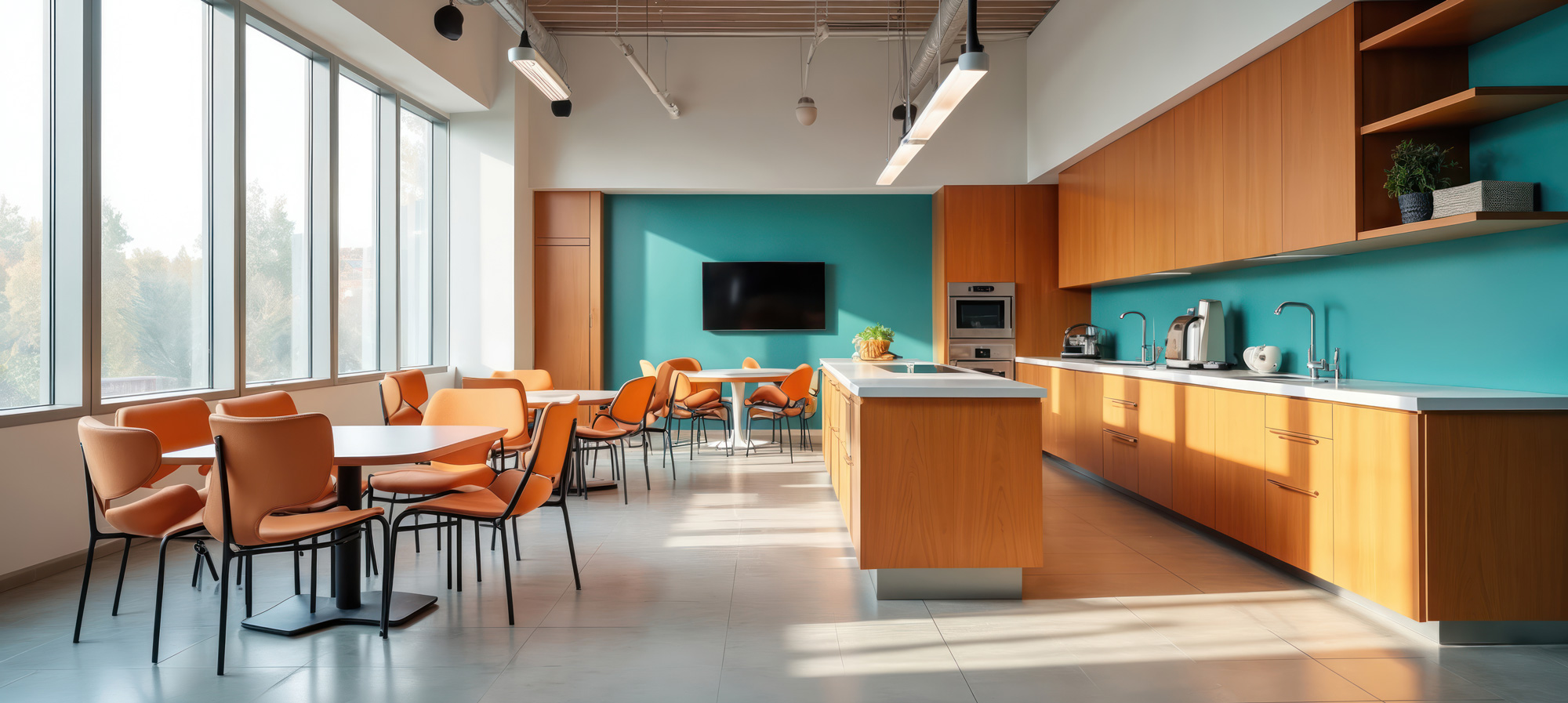
The investment required to design genuinely good staff spaces is modest relative to total project cost. A properly sized, naturally lit staff lounge. A dignified locker facility. A service corridor with enough width to function during shift change. None of these are extravagant. All of them compound over time in the form of retention, recruitment, and morale.
The building you construct today will be recruiting staff in 2035. Design it for the people you need to attract. Call Pandion Development Management.