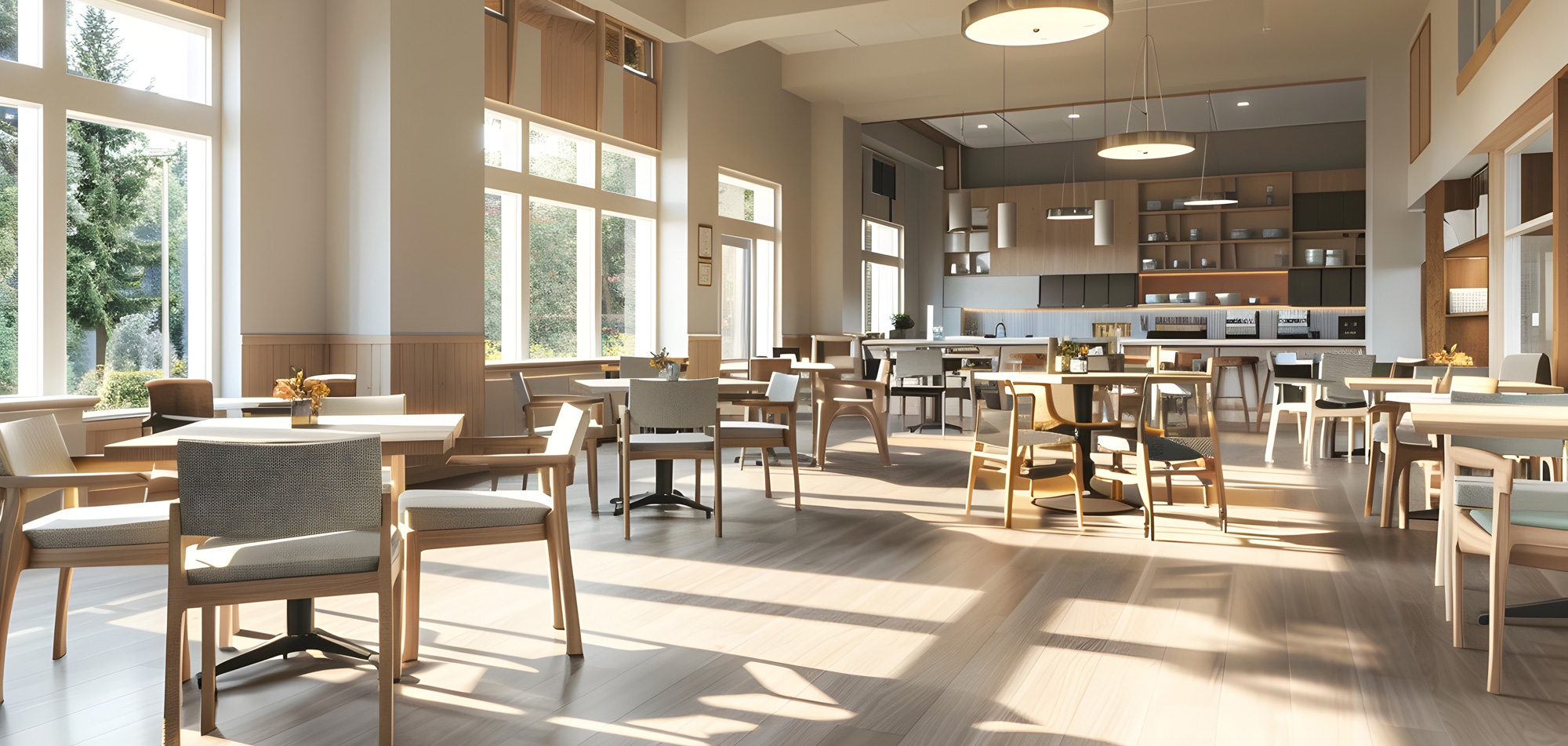
The dining room used to be a dining room. Now it’s a competitive differentiator, an operational challenge, and a capital planning problem, all at once.
Walk through the dining programs at the leading senior living communities today and you’ll find something that looks nothing like the institutional cafeterias of a generation ago.
Multiple venues. Restaurant-style service. Open demonstration kitchens. Bistro and café concepts available outside traditional meal windows. This shift isn’t aesthetic. It reflects a fundamental change in the expectations of incoming residents, primarily Baby Boomers, who spent fifty years in a food culture that treats dining as a social experience, not a nutritional obligation.
For an organization planning a major renovation or new construction, food service is one of the highest-visibility, highest-impact program decisions in the project. It’s also one of the most technically complex.
A professional kitchen serving a high-volume senior living program is serious infrastructure. Ventilation, grease management, equipment coordination, fire suppression, utility loads, and back-of-house workflow must all be integrated into a space that reads as warm and welcoming from the resident side of the pass.
Getting it right requires a specialized food service design consultant engaged early, working directly with the architect, not brought in at construction documents when the decisions are already made.
Research on senior housing consistently shows dining and food service are among the top factors in both resident satisfaction and sales velocity. In senior living, the dining program is often what converts a tour into a deposit.
Looking to build the right project team, including foodservice? Call Pandion Development Management.